
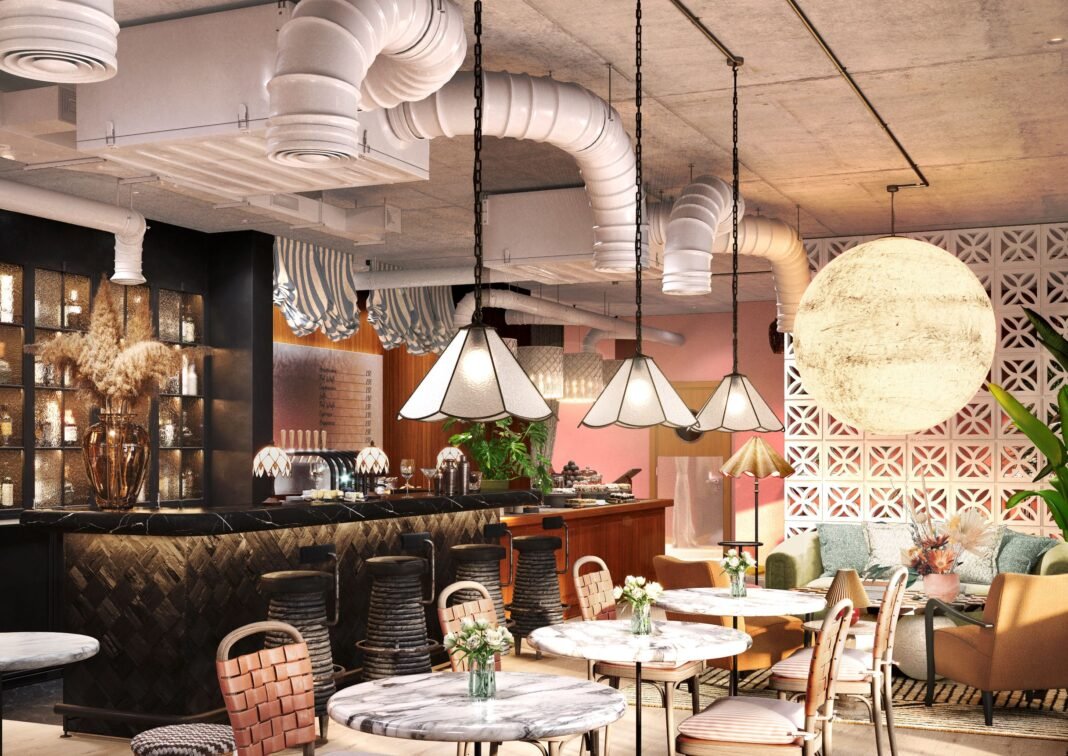
At 89 per cent more
energy efficient than the typical UK hotel, room2 Chiswick will set a new
benchmark for the $570bn global hospitality industry.
The product aligns increasing consumer and investment
interest in environmentalism and sustainable development, with a particular
focus on reducing the greatest contributor to climate change, carbon emissions
and greenhouse gases. The guest experience is unaffected by the ultra-low
energy standard, with the building’s interior design being inspired by the arts
and crafts movement around Chiswick.
Via on site renewables, the building will convert 100 per
cent of its energy needs for heating, cooling and hot water. It’s proprietary
intelligent building and reporting system seeks to improve performance across
the sum of incremental gains. Two ‘lab rooms’ provide data on energy, water use
and air quality, along with studying and learning from guest behaviours
patterns.
Other initiatives include: occupancy enabled lighting,
heating and cooling systems; a ‘blue’ roof; a ‘green’ roof; a zero waster to landfill
policy and a water purification system that uses low heat technology.
Furthermore, the hotel is piloting a recycled li-ion battery cell M-BRIC technology
and all unavoidable emissions are balance through verified nature-based carbon
removal offsets.
“Opening the world’s first whole life net zero carbon hotel
follows over two years of planning and the meticulous creation of a new room2
whole life net zero building framework to incorporate the very latest thinking
in design, construction and operation,” said Robert Godwin, Managing Director
at Lamington Group and room2.