
Still, the growers who have been practicing regenerative agriculture continue to build carbon that has value—and they could till up the soil or sell the land to a developer tomorrow—potentially releasing much of the carbon stored in the soil. To capture that value, ESMC, which is set to launch in September 2022, is also developing inventory accounting schemes in addition to a system for calculating new carbon offsets.
Valuing Existing Carbon Storage
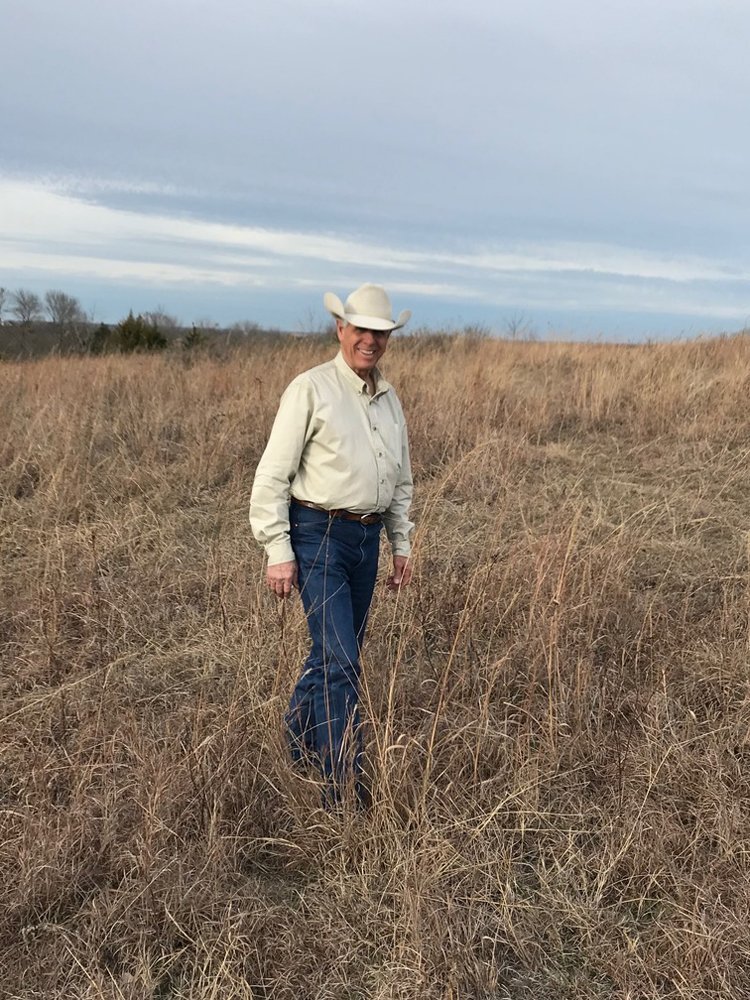
Rancher Meredith Ellis has been involved in one of 12 regenerative cropland and ranching pilot projects conducted by the ESMC, which is working with a number of big companies, including McDonald’s, General Mills, and Cargill, to develop protocols to account for carbon emissions reductions throughout the supply chain. Ellis volunteers her time with the consortium to not only better understand how much carbon her practices are storing in the soil, but also in the hopes it will lead to a way to reward good stewardship over time.
ESMC is also developing a way to compensate long-time regenerative ranchers, such as Ellis, who have already achieved lower emissions through regenerative practices via Scope 3 emissions reporting. Corporations can report their greenhouse gas inventories across three different categories, called scopes, using the Greenhouse Gas Protocol, developed by the World Resources Institute and its partners. Scope 1 is the organization’s directly owned or controlled emissions; Scope 2 covers indirect emissions from power generation.
Scope 3, however, includes indirect emissions from the company’s supply chain—for example, the production of wheat or the transport of sugar. Food and beverage companies often have more Scope 3 than Scope 1 emissions. In fact, 93 percent of Pepsi’s emissions are Scope 3, says Reed. ESMC has created protocols that companies can use to report the additional tons of carbon removed or reduced from the atmosphere as a result of interventions the company’s producers have put in place. As part of their pilot projects, farmers are paid $15 per ton for each additional ton of carbon dioxide removed or reduced—which is also the going rate of the carbon offset market.
“I can’t say for sure what that value [for Scope 3 assets] will be,” says Reed. “It may be nominal.” Beyond market-based approaches, ESMC hopes to see the U.S. Department of Agriculture (USDA) find a way to compensate early adopters of regenerative practices—those who have used those practices for five years or more—because they can offer technical assistance that newcomers will need, says Reed.
Gary Price, owner of the 77 Ranch in Blooming Grove, Texas, has been working with ESMC for the last three years. He’s hopeful their supplier emissions reporting approach offers a way to account for all the carbon he and fellow regenerative ranchers sequester on their land. “It doesn’t make sense to not reward good behavior,” he says.
Unlike ESMC, some companies are looking for ways to circumvent the additionality requirement altogether. Nori, for example, issues credits to producers who have made a verified practice change any time after December 31, 2009, for each ton of carbon dioxide they’ve sequestered since then.
“We just need to agree on a [transparent and predictable] performance baseline, and anyone meeting or beating that baseline gets credit regardless of whether they’ve been doing the practices for 5 minutes or 25 years,” argues Aldyen Donnelly, co-founder of the Nori Carbon Removal Marketplace. “If we are serious, we want everybody to find profit in a new way of doing things,” she says.
But without additionality, Nori’s credits are not certified by the most widely used third-party registries, such as Climate Action Reserve, Verra, and Gold Standard. Each credit or Climate Reserve Tonne (CRT) represents one metric ton of carbon dioxide equivalent (CO2e) emissions reduction or sequestration. Most offsets are listed in these registries, which track projects and set standards and protocols for carbon accounting. To date, all the existing registries have only issued around 5 billion credits since 2002. Around 50 percent of those credits haven’t been retired or used, says Donnelly, in part due to a roughly five-year lag time between when the emission reduction occurred and the credits are issued and available for purchase.
“It’s too long for a project owner to wait to recover the costs of adopting new practices,” she says. “And buyers deem them too old when they become available.”
“Everyone agrees, [many of] the carbon registries included, that the way we’ve done this in past will not allow us to scale up,” says ESMC’s Reed. She says there has been a flurry of activity to digitize and encrypt the process, while also bringing down verification costs to make it work without abandoning credibility.
The existing credits are also dwarfed by the annual emissions from the top polluters. Just 100 fossil fuel producers have emitted nearly 1 trillion metric tons of greenhouse gas emissions, which is over half of the total emissions released since the Industrial Revolution began in the 1750s.
Additionality has created confusion among farmers and tension among the competing market endeavors. But Reed points out that ESMC aims to generate other ecosystem service credits—including water quality, water conservation, and biodiversity habitat—that will also benefit long-term regenerative farmers. And as markets develop, Reed adds, “we can’t just be focusing on new carbon sequestration and new emissions reductions. Sooner rather than later, we have to also protect those existing carbon stocks because every ton of carbon lost is harder and more expensive to put back.”
In the meantime, the additionality requirement (or lack thereof) has led to competition and even ever-shifting qualifications at some companies, which has made some farmers wary of the markets overall. Many are also uneasy with companies such as Indigo Carbon, which require farmer data in exchange for contracts (neither ESMC or Nori do).
When Iowa soybean farmer Chris Gaesser first began talks with Indigo, he was told that just over 3,000 of his acres would qualify for payments. As experts criticized the company’s methodologies, the company changed the guidelines for what qualified as a “new practice,” and Gaesser’s number of eligible acres was whittled down to 1,400, then 800, then 200. At that point, he says he had little incentive to spend the time and energy to get the data necessary to secure the credits. (And, he adds, some of these companies’ services only have value because of the data farmers give to them.)
“There’s not a lot of excitement about carbon markets,” says Gaesser. “It’s such a new thing and the regulations change so quickly. Everybody and their dog outside of agriculture feels like trying to get into the carbon market to get that money,” he adds. His father and business partner, Ray Gaesser, added, “everybody up the line wants their 15–20 percent cut and there’s little left by the time it gets to the farmer.”