
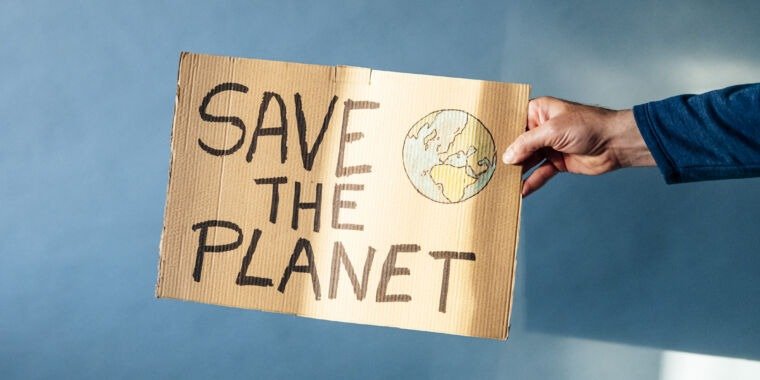
EnlargeGetty Images
After the most recent report from the Intergovernmental Panel on Climate Change (IPCC) last month, it’s easy to feel demoralized. With everything else in the news, it’s also easy to focus on threats that are arguably more imminent, like the delta coronavirus variant. But the threat from the climate crisis is increasingly part of our everyday lives—and it’s going to get worse.
As a result of insufficient action over the past several decades, the next 30 years will bring more extreme weather and a temperature rise of at least 1.5° C, no matter what we do. But—and there is a very important but—collective action now will decide whether the future is even worse than the IPCC’s already grim forecast.
“The question now isn’t whether we’re going to avoid this,” says Professor Michael E. Mann, a leading climatologist at Pennsylvania State University who has been a proponent of recognizing and combating climate change. “It’s how bad are we willing to let it get.”
Mann has a new book that describes how climate deniers have shifted tactics in recent years, going from saying there’s nothing to worry about to suggesting that it’s too late for our actions to have any impact. There has also been a concerted effort to shift attention to individuals rather than holding the biggest polluters accountable. But if we’re to have any chance of a better climate future, a combination of both individual and collective action is the only way forward.
“We should all do what we can do to minimize our own environmental impact, which in many cases are things that make us healthier and save us money, too,” says Mann. “But the most important thing we can do is use our voices in every way possible—to make climate part of your daily conversation so that there is this larger public awareness and pressure on our policymakers to do the right thing.”
So, if you’re not yet prepared to surrender to an increasingly dire climate future, here are a few reminders that there’s a lot you can do—starting with things you can do as soon as possible. There is, of course, no one-size-fits-all approach, and everyone has to work within their own circumstances—but every contribution is a step in the right direction.
Change the conversation
Unprecedented wildfires, floods, cold weather, and “virtually impossible” heat domes have become regular events. The effects are no longer looming in the future—we’re mired in the consequences of the climate crisis right now. Extreme weather and disasters, which are clearly attributable to human activity, are the new normal, and they will be for decades to come (if not longer).
These events aren’t the most uplifting topics of conversation, but working toward solutions can be. The old saying, “Everybody talks about the weather, but nobody does anything about it,” has been true in the past, but we now know that people really can do something about it. So, as a first step, if you find any worthwhile information, share it—with your friends, family, neighbors, colleagues, social networks, and anyone else. Asking questions, sharing ideas, and joining conversations are all ways to motivate yourself and others.
If there are any young people in your life, there are resources to help them learn about the climate as well—an understanding that can’t be taken for granted in all school systems.
“There is an effort by polluters and right-wing politicians who work on their behalf to promote climate change denialism in our schools—in a way that mirrors the efforts by creationists to water down the teaching of evolution,” says Mann, who is also a member of the board for the National Center for Science Education. “This is potentially the greatest threat that our children and grandchildren face, and misinforming them intentionally about that is deeply immoral—so I would encourage people to contribute to any of the organizations making sure that kids are getting taught the actual science of climate change.”
Make your next meal climate-friendly
Even if the world cuts fossil fuel use tomorrow, food production alone is estimated to produce enough emissions to further increase global temperatures by 1.5° C to 2° C. Beef and dairy are the biggest contributors—particularly in the US. Cutting just these two foods may have more impact than any other single action an individual can take. However, there’s no need to become vegan overnight or even ever; any reduced consumption will help.
Beyond avoiding cattle, there are resources to help determine which meats have the lowest impact (spoiler: poultry is best). Pescatarians aren’t in the clear—farmed and wild crustaceans can have a larger carbon footprint than pork. Aquaculture certifications are still evolving, but other resources are available for fine-tuning the sustainability of seafood platters. In general, mollusks and smaller fish like sardines are among the best options.
If you need motivation beyond saving the world, increasing evidence shows that plant-based diets are healthier. (Plus, just look how adorable cows can be.)
In addition to what we do eat, keeping an eye on what we don’t eat can also help the environment. As of the last USDA estimate in 2014, over 30 percent of the US food supply gets tossed. The global figure is also approximately 30 percent—totaling around 1.3 billion metric tons of otherwise edible food. With malnutrition still a world health crisis, systemic changes to the food industry are critical to addressing this problem. But, in the meantime, both the FDA and the EPA have tips on how to cut food waste on an individual level.
Choose climate-conscious fashion
Moving on to what you wear… according to the World Economic Forum, the fashion industry is responsible for 10 percent of humanity’s carbon emissions. What’s even more egregious is that an estimated 85 percent of newly produced clothing ends up in landfills or gets left in toxic, explosive heaps. Organizations like the Ellen MacArthur Foundation are working toward systemic changes to the fashion industry to promote longer-lasting and more easily recycled clothing, as well as using nontoxic manufacturing processes. But as a more immediate solution, buying fewer, better-quality clothes (or even used fashion) and buying sustainable brands can curb the fashion industry’s carbon footprint.
Stay off the roads
Granted, this strategy isn’t possible for many, but thanks to the pandemic (one of the few things we can thank it for), more people than ever are working from home. One recent poll showed that, of those who could work from home, as many as 50 percent would prefer not to return to the office. More than a quarter even said that they would consider leaving their current job if their employers required them to go back to the office full-time.
According to another survey, nearly 60 percent found that their productivity at home was higher than expected, while less than 15 percent thought it was worse. If reducing or eliminating your commute isn’t satisfying enough, consider that entire neighborhoods live healthier, longer lives when there’s less traffic noise and traffic-associated air pollution.
For those times you still need to get around, most of the usual advice is good as ever—walking, biking, and e-biking remain great. Public transportation and carpooling may have become less desirable in times of social distancing, but the pandemic has also prompted efforts to improve the sanitation in mass transit. If all else fails, and you really just need a car (it does happen), you can improve your fuel efficiency and consider an electric vehicle.
Use your buying power
Beyond food, clothes, and cars, nearly every other purchase has a carbon footprint worth considering. What you buy can directly support brands that are either committing to sustainability or continuing reprehensible practices like cutting down virgin boreal forests to make plush toilet paper or using illegally harvested wood for children’s furniture. It obviously can be overwhelming to stay informed about where exactly every purchase comes from, but organizations like the Natural Resources Defense Council help do some of the legwork.
“It takes immense amounts of research to figure out what one company is really doing,” says Mann. “The good news is that there are many organizations—Greenpeace, the Union of Concerned Scientists, the Environmental Defense Council, and many more—that do the hard work of investigating corporate policies and figuring out which companies are truly green.”
These organizations also help uncover greenwashing—companies that are misleading consumers about their environmental practices—and ways to avoid getting snookered by these charlatans.
Make your home economical
From energy-efficient lightbulbs to better insulation, smart thermostats, and solar panels, there are more options than ever for making homes energy—and often simultaneously cost—efficient. In the US, the Department of Energy estimates that the average household could save up to 20 percent on energy bills just by making heating and cooling more energy-efficient. Similar savings are possible for workplaces as well—and this all, of course, translates to lower carbon emissions.
A recent study modeled the US energy market and found that energy efficiency is a fundamental component of any strategy for reaching carbon-neutrality targets. Populations and energy demand are expected to continue increasing, but climate goals will require keeping energy use at roughly current levels—hence more efficient use of energy is imperative.
Online tools can calculate energy usage in your home and provide power-saving recommendations, and it’s also possible to have professional audits of your home to fine-tune energy-saving opportunities. Consider also the size of your residence, as house size is one of the top reasons why Americans have a considerably larger carbon footprint than their European counterparts. Switching to energy-efficient appliances across your household is another opportunity to increase energy efficiency.
And for all who feel a bit like they’re being poked in the eye with a stick whenever it’s assumed that everyone owns a home, here are some tips for renters as well.
End deforestation
Preserving native forests—especially tropical rainforests—is a far higher priority than replanting efforts. Not only are native forests critical for the climate, they are also key to preserving biodiversity and Indigenous peoples’ rights. Planting trees—particularly just a single species—cannot replicate these ecosystems. Furthermore, newly planted trees are often susceptible to fire, pests, and drought. These considerations—along with finding a trustworthy program that will actually plant trees as promised—are some of the potential drawbacks of carbon offsets generated through replanting programs.
Reducing deforestation often requires indirect actions, like reducing beef consumption and watching where paper and wood products come from (one might want to keep an eye on coffee, chocolate, and the disarmingly pervasive palm oil, too). Demand for these products in rich countries is driving deforestation in low- and middle-income parts of the world, and cutting that demand will deprive these regions of this revenue. So it’s imperative to provide financial incentives for these countries to preserve their existing forests instead, e.g., through the Coalition for Rainforest Nations.
On a local level, urban greening is a worthwhile contribution as well—for the climate and people’s health. And if you haven’t heard yet, lawns are terrible for the environment.
Reduce, Reuse, Recycle
This classic trio still holds true—with a particular emphasis on reducing and reusing (see above). Although recycling some forms of plastic turned out to be a bit of a scam, generally paper, metal, and glass recycling do work. Odds and ends—particularly electronics—might require a little extra research, but organizations like the Environmental Protection Agency and the Consumer Technology Association have additional guidance.
One of the biggest problems for recycling across the board is contamination—e.g., lithium batteries in the wrong place, recyclables full of food waste, or straight-up garbage in the mix. Doing a little research into your local recycling facility’s dos and don’ts can go a long way towards making its operations more effective. Beyond looking for established recycling solutions, people have developed their own creative, commercially lucrative ideas for recycling things like plastic and chop sticks, too.
As an addendum, composting can also significantly reduce the amount of garbage that goes to landfills.
Get political
Voting is a good start, but keeping politicians accountable takes extra work. Writing letters, joining environmental groups, or donating to philanthropic groups are all ways to promote action on a systemic level.
“Individuals can’t create subsidies for renewable energy or put a price on carbon or block the development of additional fossil fuel infrastructure, but through collective action we can work together to put pressure on our policymakers,” says Mann, who covers many of these topics in his recent book The New Climate War. “We’ve seen the current US administration taking bolder action on climate than we would have seen if it weren’t for the grassroots efforts by climate advocates putting pressure on Joe Biden during the campaign.”
The recent COP26 UN Climate Change Conference provides a good opportunity to apply some of that pressure. The US, which has been the top CO2-emitting country when historic carbon emissions are totaled, is closer than ever to passing a clean electricity standard that would incentivize utility companies to shift to 80 percent clean energy by 2030. With solar and wind power getting better all the time, the technology is available to make this shift—if enough people demand it.
“There’s a real opportunity for us to see meaningful progress later this year, and the Global Youth Climate movement has helped re-center the issue on our ethical obligation to not destroy the planet,” says Mann. “We’re as well-positioned to see meaningful climate action now as we’ve been in decades.”
For more information:
Carbon-footprint calculators:
https://offset.climateneutralnow.org/footprintcalc
https://coolclimate.org/calculator
https://www3.epa.gov/carbon-footprint-calculator/
Organizations fighting climate change:
Additional resources: