
Farming accounts for 24% of Europe’s greenhouse gas emissions, and this is largely due to the intensive, “industrial” farming methods employed in the last few decades, together with the rise in the consumption of meat. However, a new approach has been taking the farming world by storm. “Regenerative farming” practices hand unproductive land back to nature, boosts wildlife and stores planet-killing CO2, literally using soil as a carbon sink.
By creating woodlands and restoring peatlands, carbon can be captured while simultaneously arresting the decline in natural diversity, essential for things like bee pollination. Plus, regenerative farming plays into the drift away from older government subsidy regimes, which are switching to focusing on the environment and CO2 emission, and away from industrial farming.
Agreena is a Dutch startup that mints, verifies and sells carbon credits generated by farmers who transition to more regenerative forms of farming.
Launched only this summer, the company has now raised a $4.7 million seed funding round led by Giant Ventures, along with the Danish government’s Danish Green Future Fund. A number of European farmers also participated.
Agreena says its platform provides farmers with an economic incentive to switch from traditional arable farming to regenerative agricultural methods by issuing them a “CO2e-certificate” which can be sold between farmers and potential buyers.
So how does it work? Farmers register their fields and get advice on transitioning to regenerative practices. The changes are then monitored by Agreena via satellite imagery and soil verification. The farmers can then sell the CO2e-certificates independently or via Agreena’s marketplace to companies that want to buy the carbon offsets from the farmers. Buyers then track their sponsored CO2 reductions at a field level via Agreena’s platform.
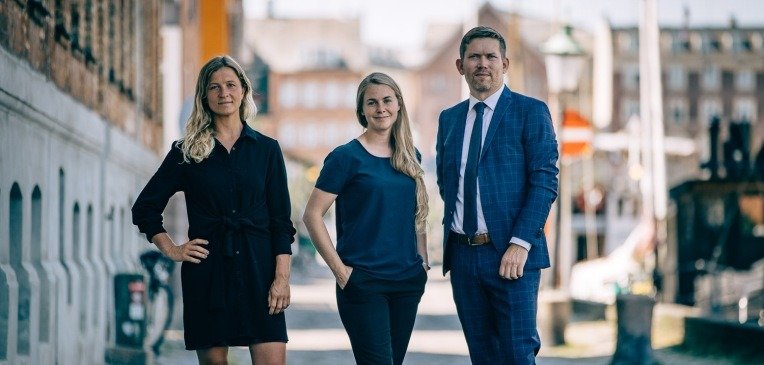
Simon Haldrup, Agreena CEO, said: “Our team consists of 30 professionals including carbon scientists, software developers, and commercial growth hackers. Agriculture has deep roots in Denmark, a historically proud farming nation, which is why the company was born here, but we are scaling across Europe and intend to expand globally.” Agreena was founded by Haldrup, Julie Koch Fahler and Ida Boesen.
Agreena claims to have contracted more than 50,000 hectares in its first year, pre-selling more than 20% of their minted carbon offset certificates.
The startup has some competition in the space. The voluntary carbon market for agriculture includes U.S. scale-up Indigo (U.S. unicorn), Nori (U.S. & blockchain-focused) and U.K./France-based Soil Capital. But Agreena says its key differentiator is its vertically integrated carbon platform.
Cameron McLain, co-founder and managing partner of Giant Ventures, commented: “We’re excited by Agreena’s vertically integrated approach towards agricultural carbon offsets, which is empathetic to the nuances of the industry and the incentives of farmers. We also believe Agreena can become the dominant internet marketplace for facilitating online B2B commerce within farming, a nut which no one has yet cracked.”