
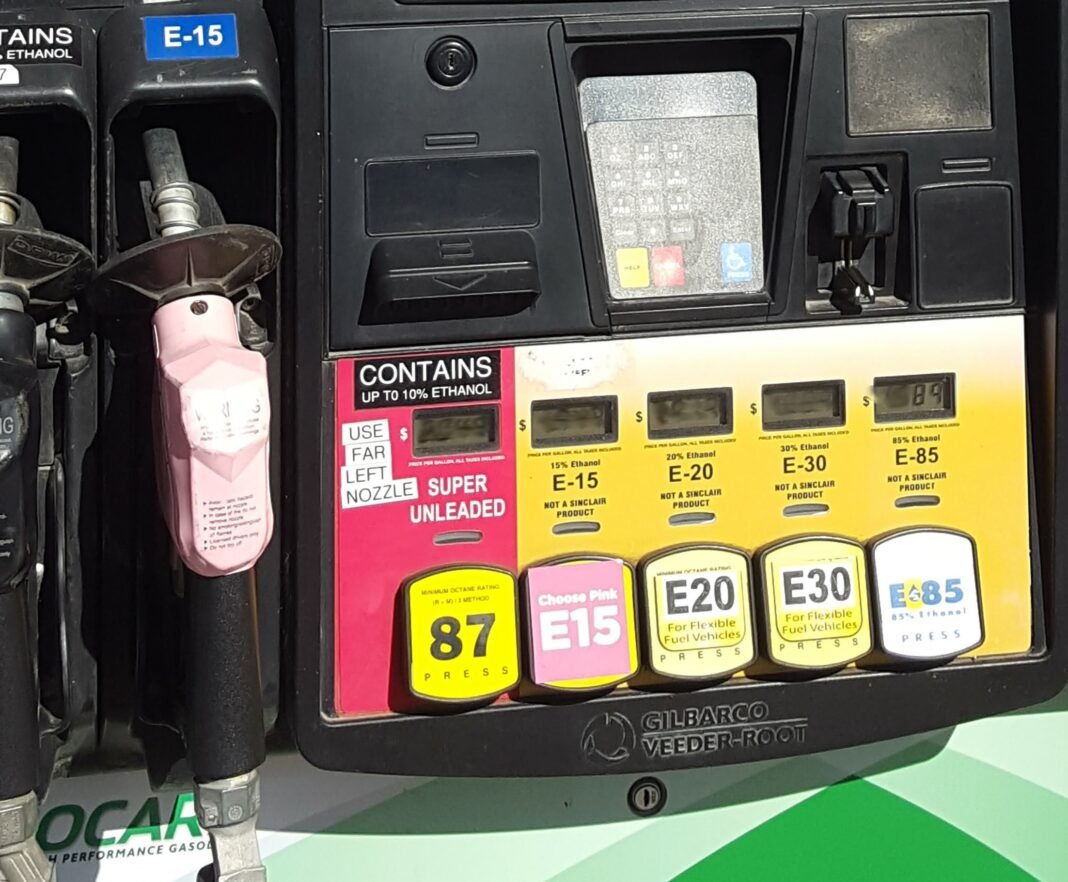
Statewide Iowa — The biofuels industry is casting doubt on the idea liquid fuel will be phased out anytime soon, but it’s also lobbying for ethanol and biodiesel to be included in carbon reduction plans.
President Biden was joined by Ford and GM executives Thursday as he announced a set of fuel efficiency standards, with the goal of having up to half of the vehicles sold in the U.S. be electric by 2030. Iowa Renewable Fuels Association executive director Monte Shaw calls those kind of goals aspirational.
https://kiwaradio.com/wp-content/uploads/RIkayEVs2.mp3
Shaw suggests a vehicle in Iowa that’s burning gas with 85 percent ethanol today likely has a lower carbon footprint than an electric vehicle, because 25 percent of electricity in Iowa is generated from coal.
https://kiwaradio.com/wp-content/uploads/RIkayEVs3.mp3
Kelly Niewenhaus, a farmer from Primghar, is on the Iowa Corn Promotion Board. He says the other obstacle is there’s no nationwide grid to support electric vehicles.
https://kiwaradio.com/wp-content/uploads/RIkayEVs1.mp3
Niewenhaus says another market for ethanol is jet fuel. Batteries are still so heavy it’s unlikely electric airplanes will replace fossil fuel-powered aircraft anytime soon. Niewenhaus and Shaw made their comments on Iowa Press on Iowa PBS. Several Republican lawmakers from Iowa, including Senators Chuck Grassley and Joni Ernst, are criticizing the Biden Administration for backing development of electric vehicles while failing to include biofuels infrastructure in the president’s plans.
Meanwhile, MidAmerican Energy is offering a 500 dollar rebate to customers who purchase an electric vehicle, Hy-Vee has partnered with Tesla and another company to install charging stations and John Deere has unveiled a fully electric, autonomous tractor.