
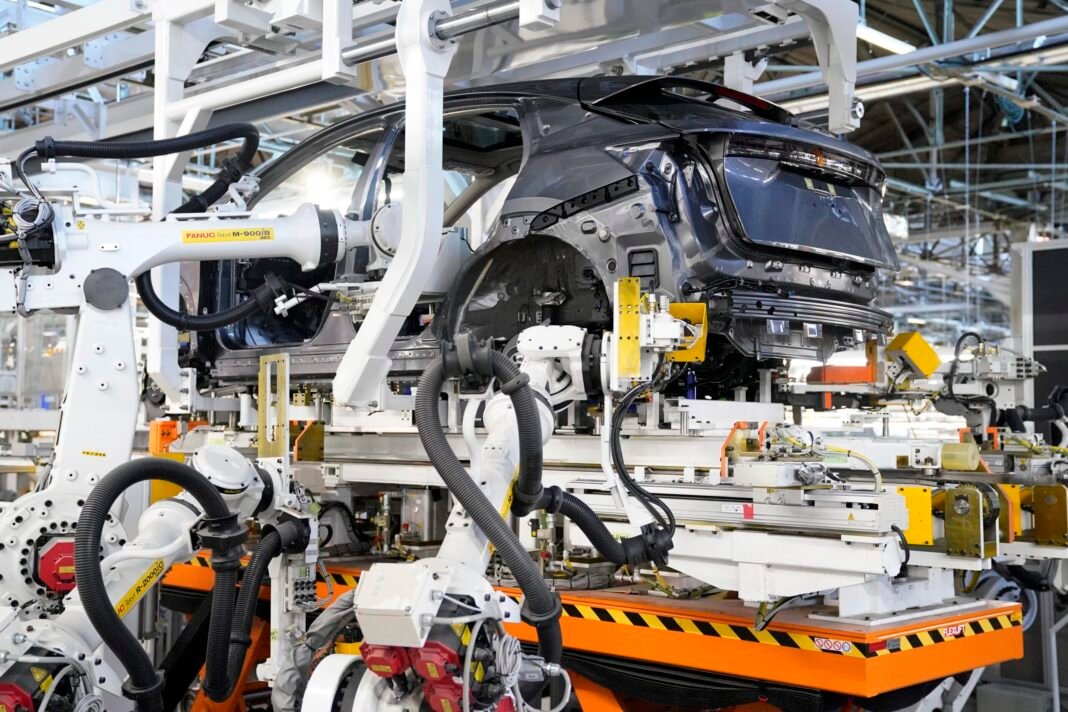
The Tochigi Plant in Japan is Nissan’s first manufacturing facility to have a Nissan Intelligent Factory production line. However, the company plans to roll it out globally as part of its aim to be carbon neutral by 2050.
Nissan unveiled its production line at the Tochigi Plant in Japan featuring the Nissan Intelligent Factory initiative. The initiative is part of Nissan’s overall goal of becoming carbon neutral by 2050.
Nissan plans to realize carbon neutrality through innovations on the production floor, starting with its Nissan Intelligent Factory initiative, and by improving energy and materials efficiencies at its plants. All plant equipment will be fully electrified by 2050, and all electricity used in production plants will be generated from renewable energy sources or generated with onsite fuel cells that use alternative fuels.
“By rolling out the Nissan Intelligent Factory initiative globally, starting at the Tochigi Plant, we will more flexibly, efficiently and effectively manufacture next-generation vehicles for a decarbonized society. We will continue to drive innovation in manufacturing to enrich people’s lives and to support Nissan’s future growth,” said Hideyuki Sakamoto, Nissan executive vice president for manufacturing and supply chain management.
The Nissan Intelligent Factory will also allow the company to diversify its work styles so that more women and elderly can work with greater ease.
The Nissan Intelligent Factory uses robots to manufacture next-generation vehicles and realizes a zero-emission production system. Nissan says it also creates an improved environment where a wide range of people can work comfortably.
In the Southern U.S., Nissan has its Smyrna and Decherd assembly plants in Tennessee and its Canton assembly plant in Mississippi.