
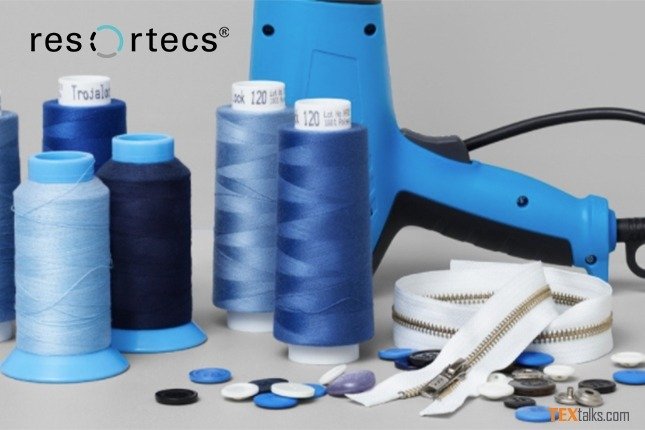
Resortecs, founded four years ago, claims that if brands used their textiles, they would be able entirely and sustainably to recycle their clothes. The aim is to easily reuse textiles by using “thermofusible” threads to stitch them together. These threads would melt at specific temperatures in low-emission disassembly ovens capable of treating tonnes of clothes. The technology made the shortlist of finalists for the ‘Stepping Ahead’ category of the 2021 Enterprise Europe Network Award, a prize supported by the European Commission. The winners will be announced on 1 OctoberResortecs plans to open the first disassembly oven at the start of October in Belgium. This will demonstrate the technology to the first commercial partners -established brands like H&M, Tommy Hilfiger, and Decathlon. A second oven will be opened in 2022, with Resortec(R) predicting that together the two should be capable of recycling “10 to 13 tonnes of clothes per day – a scale that has never before seen on the global level.
Resortecs(R) offers global patented solutions that enable garment recycling thanks to the automatic disassembly of apparel at an industrial scale. Due to the complexity of garment disassembly, less than 1% of all garments are recycled in a high-quality manner. Zippers and buttons make garment recycling and reuse complicated as removing such details calls for manual assistance, making the process costly and time-consuming.
Resortecs(R)’ technology dismantles garments five times faster thanks to the Resortecs(R)’ eco-system that combines melting stitching threads with industrial disassembling ovens. Resortecs(R) stitching thread works double wonders – it makes both repairing and recycling a breeze. When used for assembly, the whole piece of clothing can easily be disassembled later on so that the fabric can be used over and over in new ways, cutting the ne.ed to produce fabric from scratch.